The Process
of gathering wild plants and making traditional healing remedies
Go for a walk in the forest, breathe in the fresh oxygenated air and be
thank full
(01)
This culturally modified tree is an example of sustainable harvesting. Cedar bark was removed without damaging or killing the tree.
(02)

Cottonwood (Poplar)

Willow
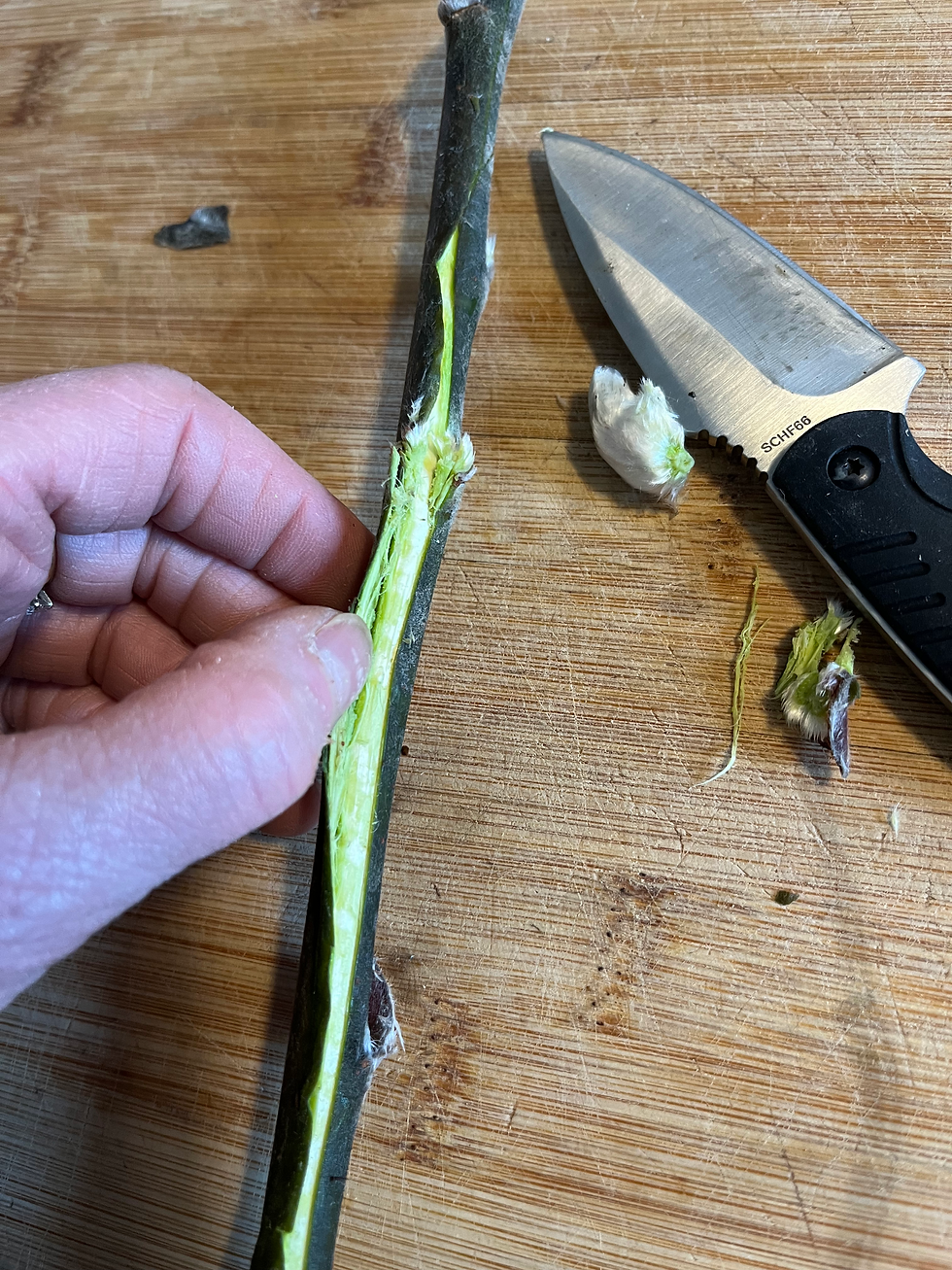
Elizabeth collects spring buds then returns home to infuse the goodness from the buds into Olive oil for making a soothing salve. Once known as the 'Balm of Gilead', Poplar has been known for centuries for its antiseptic, analgesic and anti-inflammatory properties.
It is known as the original aspirin. We want the Salicin from the inner stem. This labour intensive project involves peeling off the outer layer then cutting up and infusing stem pieces into Organic Olive Oil for 6 weeks. When massaged into joints and muscles it can help ease pain.
Devils Club


Devil's Club is an apt name. Its broad leaves tower above us and the air is sweet smelling under this canopy, but beware the dense thorns! It is endangered by loss of a unique habitat and because it only grows a few inches each year, taking many years to mature. To ensure Devils Cub thrives we harvest only a minimal amount from each plant.
The thorn layer is peeled off then the cambium layer is chipped and used along with roots to make an infused oil. The remaining stem can be used to make interesting creative pieces.